 中文版
中文版
The competition is more simple and cruel, testing the product hardware and software self-developed hard strength
After the help and influence of the capital market on the industry is reduced, the product and delivery capacity gap between manufacturers is more prominent. To a greater extent, delivery is a problem of management ability, and whether both software and hardware self-research ability is the key to open the gap between manufacturers: manufacturers with self-research software and hardware technology have significant advantages in cost control, product design autonomy and flexibility, software and hardware adaptation and other aspects.
① PFSK152-3BSE018877R2-3BSC980006R361 Hardware: hardware technology has a certain convergence, the transparency of the industrial chain is getting higher and higher, the price of parts will be further lowered in the future, and manufacturers with hardware self-research ability will achieve greater cost advantages;
② Software, algorithm: the differences between the software algorithms of various manufacturers will always exist, mainly from the understanding of the industry and the scene, the accumulation of experience, the algorithm self-research ability of manufacturers can continuously optimize the product for different application scenarios.
In addition, for integration projects, the guided vision solution is more customized than the quality inspection class, and the ability to develop self-developed cameras and software is more advantageous for manufacturers to develop the overall solution.
Taking the guidance market as an example, less than half of the products shipped in 2023 with self-developed camera + software as a complete package are still available, but there is an improvement compared to 2022. Many manufacturers who originally only focused on hardware or software have realized the importance of software and hardware self-research, but it is difficult to quickly realize full self-research due to the technical threshold and development cost in the short term.
In the 2023 3D vision guidance market, many solution manufacturers tend to cooperate with professional camera manufacturers rather than independent research and development, and the number of manufacturers with self-developed cameras is small, which further increases the market concentration compared to 2022.
Variation II
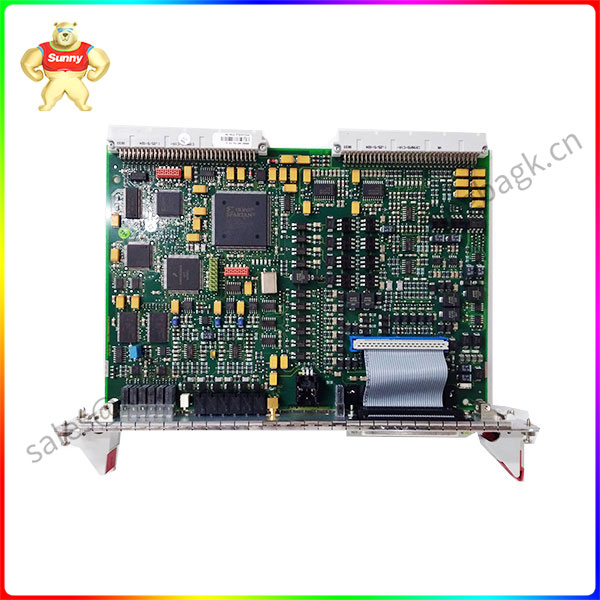
PFSK152-3BSE018877R2-3BSC980006R361
There has been progress in user education and clear needs
The early expectations of users for industrial 3D vision products are often too high, and it is difficult to accurately understand the real functions and characteristics of the product. After recent years of market education, on the one hand, users have a more accurate understanding of the product and reasonable expectations, on the other hand, users are more familiar with 3D vision products, and put forward more professional and specific needs, such as the compact and small size of the camera in the “eye in hand” program paired with collaborative robots.
PFSK152-3BSE018877R2-3BSC980006R361 3D vision products and solutions have strong customization requirements, and the most typical characteristics of users are industry and application scenario attributes. Different industries and application scenarios have great differences in product requirements.
In 2023, the demand for guided 3D vision in new energy-related auto parts, vehicle vehicles, and lithium battery industries increased, and application scenarios such as guided assembly and gluing have made progress in addition to traditional handling applications; Steel structures and ships in the metal products industry are growing rapidly in the new application scenarios of non-teaching welding. Industry demand is expected to remain good beyond 2024, in addition to the home appliance industry driven by intelligent manufacturing upgrades, will achieve growth.
Handling loading and unloading (including dismantling and palletizing) is the most important downstream application scenario of industrial 3D visual guidance, and the current product solution is more mature, and has been widely used in warehousing logistics, auto parts and other industries. In addition, new solutions in scenarios such as lithium battery cell handling and logistics loading and unloading trucks continue to mature, and the proportion is expected to continue to expand in the future. Sorting, assembly, etc., also has a more mature application basis, and it is mainly applied to expand in new industries. Welding, grinding and other process applications are relatively difficult, low maturity, it is expected that the future will be standardized in the scene with replication potential, such as steel structure without teaching welding.