中文版

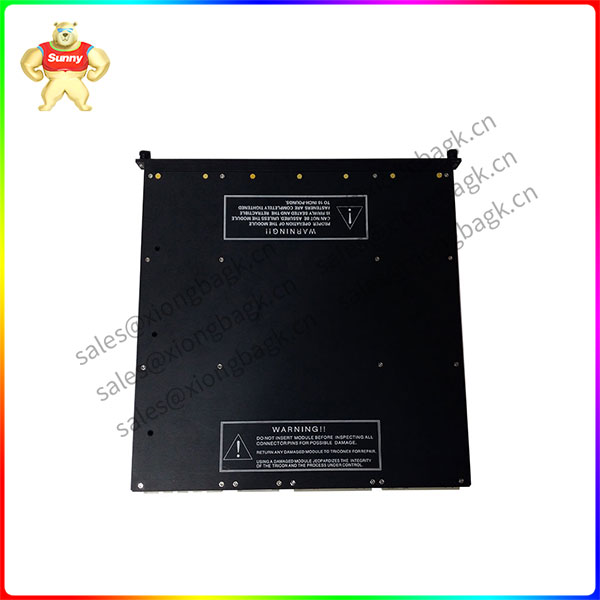
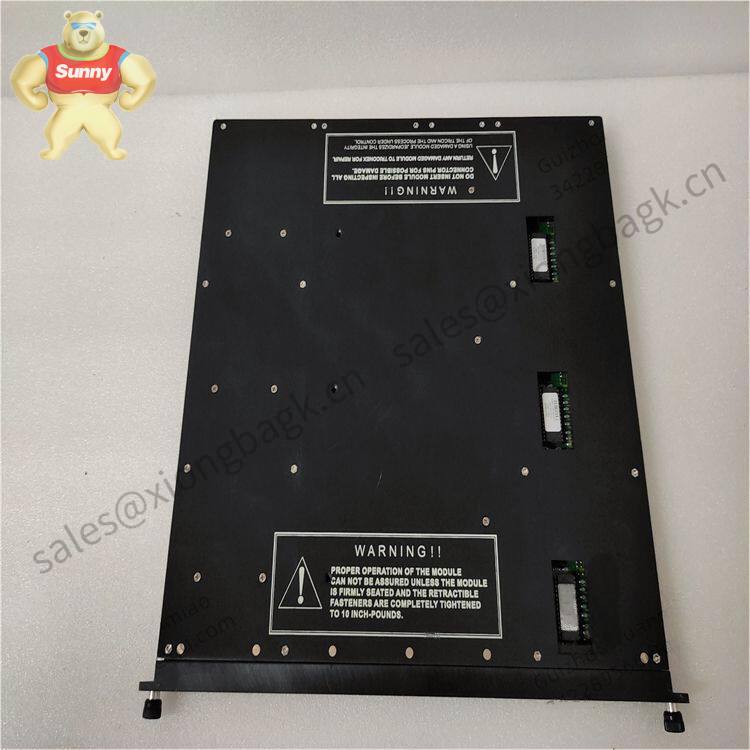
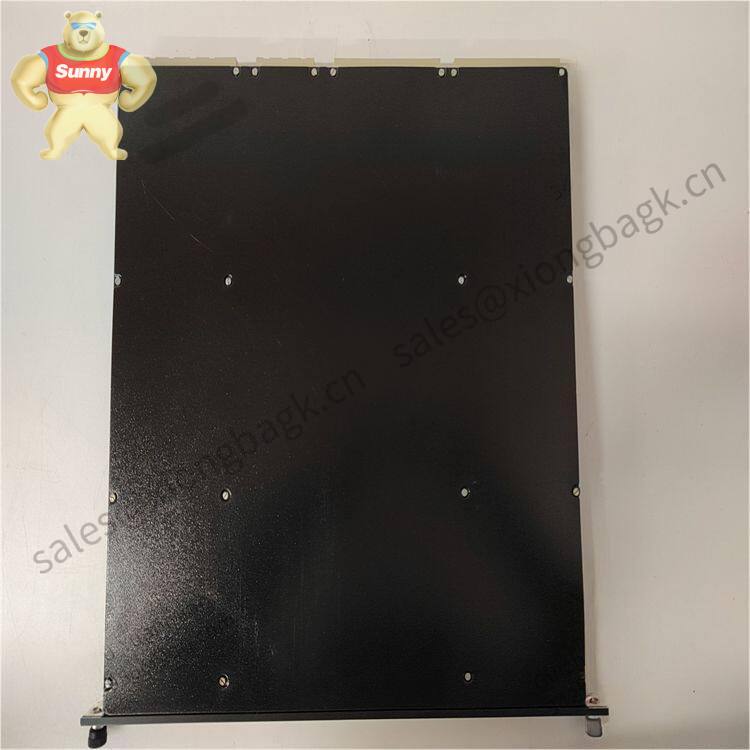
Description
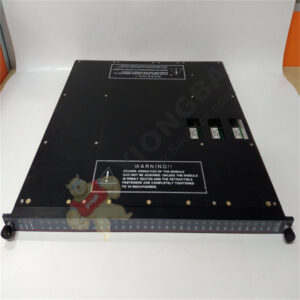
The TRICONEX 3720 is a high‑channel‑count, single‑ended analog input module designed for Tricon TMR systems. It focuses on precise, repeatable 0–5 VDC signal capture (with simple 0–20 mA support via 250 Ω shunts) across safety‑critical applications where availability and diagnostics matter. From my experience, plants choose it when they need lots of clean channels without sacrificing the determinism and fault tolerance you typically expect from Triconex.
Company’s Order Placement Process and Guarantees
- Warranty period: 365 days
- Delivery time: 1 week if in stock; no more than one month at the latest
- Payment terms: 50% advance payment; full payment prior to delivery
- Express delivery: FedEx, UPS, DHL
Key Features
- 64 single‑ended analog inputs – Packs high channel density into one slot, which in many cases reduces chassis count and wiring complexity.
- 0–5 VDC input with +6% overrange – Ideal for voltage‑output transmitters; gentle overrange helps catch peaks without clipping.
- 0–20 mA ready via 250 Ω shunt – Simple field adaptation when current loops are preferred or already installed.
- 12‑bit or 14‑bit programmable resolution – You can tune conversion depth to balance accuracy and scan performance.
- <0.15% FSR accuracy (0–60°C) – Stable readings across typical control‑room temperatures; you might notice fewer nuisance alarms.
- TMR architecture with per‑channel diagnostics – Channel‑level online diagnostics; single‑channel faults trigger Fault LEDs and chassis alarms without stopping the module.
- Fast 10 ms input update rate – Suitable for higher‑frequency trends and protective logic that shouldn’t wait around.
- Point‑level isolation and robust protection – Typical 150 VDC/115 VAC continuous over‑voltage tolerance, ~140 kΩ input resistance when unpowered, and ~420 kΩ inter‑leg isolation (typ.).
- Hot‑swap and hot‑standby support – Replace a faulty card online; in most cases process uptime stays intact.
- Keyed mechanical design – Prevents insertion into the wrong slot and reduces commissioning mistakes.
Technical Specifications
| Brand / Model | TRICONEX 3720 |
| HS Code | 853710 |
| Signal Inputs | 64 single‑ended analog inputs; 0–5 VDC nominal (+6% overrange). 0–20 mA via 250 Ω external shunts. |
| Resolution / Accuracy | Programmable 12‑bit or 14‑bit; <0.15% FSR within 0–60°C |
| Update Rate | 10 ms typical |
| Isolation & Protection | Point‑level isolation; continuous 150 VDC/115 VAC over‑voltage protection; input resistance ~140 kΩ (power off); inter‑leg isolation ~420 kΩ (typ.) |
| Power Requirements | Backplane powered via Tricon chassis power supplies (no external module power) |
| Operating Temperature | 0 to 60°C |
| Dimensions & Weight | Tricon standard I/O card; weight approx. 2.1–2.7 kg (4.7–6.0 lb). Fits Tricon 19‑inch chassis; typical chassis size 19 in W × 22.75 in H × 17.75 in D. |
| Communication Interfaces | System backplane; integrates with Tricon main processors and optional comms (e.g., TCM 4351A/B, 4352A/B) |
| Installation Method | Keyed, hot‑swappable plug‑in module for Tricon 811x/8121 chassis |
Application Fields
The 3720 is used where high channel density and dependable data quality are priorities. Typical deployments include:
- Oil & Gas and Petrochemical – SIS analog input marshalling, compressor protection, burner management verification.
- Power Generation and Nuclear – turbine auxiliary monitoring, balance‑of‑plant interlocks, radiation and process sampling (voltage‑output sensors).
- Semiconductor and Advanced Manufacturing – cleanroom utilities, abatement, and process tool safeguarding where many analog points are crowded.
- General Process Industries – high‑density transmitter acquisition for DCS/SIS hybrid architectures.
One thing I appreciate is how the single‑ended design lets teams aggregate lots of low‑level signals cost‑effectively, while still keeping TMR behavior and diagnostics you want for IEC 61508 projects. When used within a certified Triconex system, meeting SIL 1–3 targets is straightforward.
Advantages & Value for Procurement
- High channel density – Fewer cards and less rack space per I/O point, which typically lowers panel and wiring costs.
- Safety‑grade availability – TMR with online diagnostics reduces spares usage and downtime risk.
- Lifecycle alignment – Works with mainstream Tricon power, comms, and TriStation 1131 v4.x+; extension and replacement strategies stay simple.
- Flexible signal strategy – Accepts voltage natively and current via shunts; reusable across units with mixed transmitter outputs.
- Ease of maintenance – Hot‑swap capability and fault LEDs speed up troubleshooting and mean quicker MRO turnaround.
Installation & Maintenance
- Cabinet & chassis – Install in a Tricon Main (8110), Expansion (8111, 8121), or Remote Expansion (8112) chassis within a 19‑inch rack. Allow front/rear clearances for airflow and service.
- Power & grounding – Use Tricon power supplies (8310 120 VAC/VDC, 8311 24 VDC, 8312 230 VAC). Bond cabinet ground; maintain low‑impedance instrument earth.
- Wiring – Use shielded twisted pair for analog signals; land on the appropriate External Terminal Panel (ETP). Separate analog signals from high‑voltage and noisy conductors.
- Current loops – For 0–20 mA, install 250 Ω precision shunts at the ETP or conditioning module to meet the 0–5 V input span.
- Configuration – Set channel resolution (12/14‑bit) and scaling in TriStation 1131 v4.x or later. Validate channel‑by‑channel diagnostics before handover.
- Hot‑swap safety – Observe ESD precautions; verify keying before insertion. The module supports online replacement, but follow site MOC and bypass procedures.
- Routine care – Periodically clean dust from cards and terminals, verify shunt resistor values, and review firmware release notes for system updates where applicable.
- Calibration & checks – Spot‑check accuracy against traceable sources across operating temperatures; you might catch drift early on older sensors.
Compatible Accessories & Options
- Chassis – Main Chassis (8110), Expansion Chassis (8111, 8121), Remote Expansion Chassis (8112).
- Power modules – 8311 (24 VDC), 8310 (120 VAC/VDC), 8312 (230 VAC), 175 W rating family.
- Communication modules – TCM (4351A/B, 4352A/B), EICM (4119, 4119A), NCM (4329, 4329G), ACM (4609) for plant network connectivity.
- Terminal & accessories – Standard analog ETPs; compatible with Analog Devices 7B series signal conditioners; I/O bus extension cables 9000 and I/O‑COMM bus extension cables 9001.
- Software – TriStation 1131 v4.x and above for configuration and diagnostics.
You might notice that plants often pair the 3720 with 7B conditioners when long runs or unusual sensor outputs are involved. It keeps noise down and scaling tidy.
Quality & Certifications
- CE and UL/CSA markings are typically available for Triconex modules used in industrial environments.
- Triconex systems are TÜV certified for IEC 61508 SIL 3; the 3720 contributes as part of the certified architecture.
- Manufactured under ISO 9001 quality systems (common for this product line).
- Warranty from us: 365 days.
Practical note from a customer shutdown: swapping a faulty 3720 during a live run took under 15 minutes, with diagnostics flagging the exact channel that misbehaved. No spurious trips, which is exactly what a TMR card should deliver.
Please contact Sunny sales@xiongbagk.cn for the best price.
➱ sales manager: Sunny
➱ email mailto: sales@xiongbagk.cn
➱ Skype/WeChat: 18059884797
➱ phone/Whatsapp: + 86 18059884797
➱ QQ: 3095989363
➱ Website:www.sauldcs.com